

How to solve the problem of internal leakage of multi-way valve?
Release time:
2024-09-29 16:20
Check and replace seals
Seal Inspection: First, you need to disassemble the multi-way valve and carefully check the internal seals. The seal may be a rubber seal, a combination seal, etc. Check whether the seal is worn, aged, cracked, deformed, etc. For example, the rubber sealing ring may become hard, lose elasticity or crack due to prolonged immersion in hydraulic oil, high temperature or pressure shock.
Seal Replacement: If the seal is found to be damaged, the appropriate seal should be selected for replacement according to the model of the multi-way valve and the specifications of the seal. When replacing the seal, make sure that the installation position of the seal is correct and the seal cannot be damaged during installation. For example, for the O-ring seal, to ensure that it is installed in the sealing groove, and no distortion phenomenon, after installation can be appropriate to apply some grease to help the seal to better fit the sealing surface.
Grind or replace the plug and sleeve
Wear inspection: Check the wear of the valve core and valve sleeve. Internal leakage may be caused by an increase in the fit clearance between the spool and the sleeve. Use precision measuring tools to measure the size of the valve core and valve sleeve to judge the degree of wear. In general, if the fit clearance exceeds the maximum allowable clearance specified by the equipment (for example, more than 0.03mm), significant internal leakage may occur.
abrasive repair: For slightly worn valve core and valve sleeve, it can be repaired by grinding. Use special grinding equipment and grinding paste to grind the sealing surface of the valve core and valve sleeve to reduce the matching gap and improve the sealing performance. Grinding process should pay attention to ensure the accuracy of grinding and surface finish, so that the valve core and the valve sleeve with a good state.
Replacing the plug and sleeve: If the valve core and valve sleeve are severely worn and the grinding cannot be effectively repaired, a new valve core and valve sleeve need to be replaced. When replacing, ensure that the dimensional accuracy and material of the new spool and valve sleeve meet the design requirements of the multi-way valve, and debug and test after installation to ensure its normal operation.
Clean up internal impurities and foreign matter
Disassemble and clean: Disassemble the multi-way valve completely, and clean the internal valve core, valve sleeve, oil passage and other components with cleaning fluid. Cleaning fluid can choose special hydraulic system cleaning agent. During the cleaning process, pay attention to cleaning out all impurities that may cause internal leakage, such as metal shavings, rubber particles, dust, etc. These impurities may be stuck between the spool and the valve sleeve, or block the internal sealing channel, resulting in leakage.
Flushing system: In addition to cleaning the multi-way valve itself, it is also necessary to flush the entire hydraulic system. Because impurities may not only exist inside the multi-way valve, but also in other pipes and components of the system. By flushing the system, impurities can be completely removed, reducing the possibility of impurities entering the multi-way valve leading to internal leakage. When flushing, you can use a flushing device with a filter to filter the flushed hydraulic oil before returning to the oil tank.
Check whether the pressure is overloaded
Pressure measurement: Use a pressure sensor or pressure gauge to measure the pressure at the inlet and outlet of the multi-way valve and related oil circuits. Determine whether the actual working pressure of the hydraulic system exceeds the rated pressure of the multi-way valve. If the pressure is overloaded, it may cause the internal sealing structure to be damaged, causing internal leakage.
Pressure adjustment and protection: If the pressure overload is found, the pressure regulating device of the hydraulic system, such as the overflow valve, needs to be adjusted to reduce the pressure to the rated pressure range of the multi-way valve. At the same time, a suitable pressure protection device can be installed in the hydraulic system, such as a safety valve. When the system pressure exceeds the set value, the safety valve can automatically open to release excess pressure and avoid damage to the multi-way valve due to excessive pressure.
Next Page
Related News
What are the hazards of internal leakage of multi-way valves?
When the internal leakage of the multi-way valve occurs, the hydraulic oil leaks from the high-pressure chamber to the low-pressure chamber, so that the effective flow of the supply components (such as hydraulic cylinders or hydraulic motors) is reduced.
How to solve the problem of internal leakage of multi-way valve?
Seal inspection: first of all, the multi-way valve needs to be disassembled and the internal seals are carefully inspected. The seal may be a rubber seal, a combination seal, etc.
What is the working principle and function of the multi-way valve?
Use the relative movement of the valve core to the valve body to turn on, turn off or change the direction of the oil flow
Introduction to the principle and working principle of hydraulic lock
The hydraulic lock uses the pressure of the hydraulic oil to lock the moving parts in a set position through the lock core to play a protective role.
What are the good or bad detection methods of hydraulic lock?
The quality of hydraulic lock can be tested by static test and dynamic test.
Recommend products
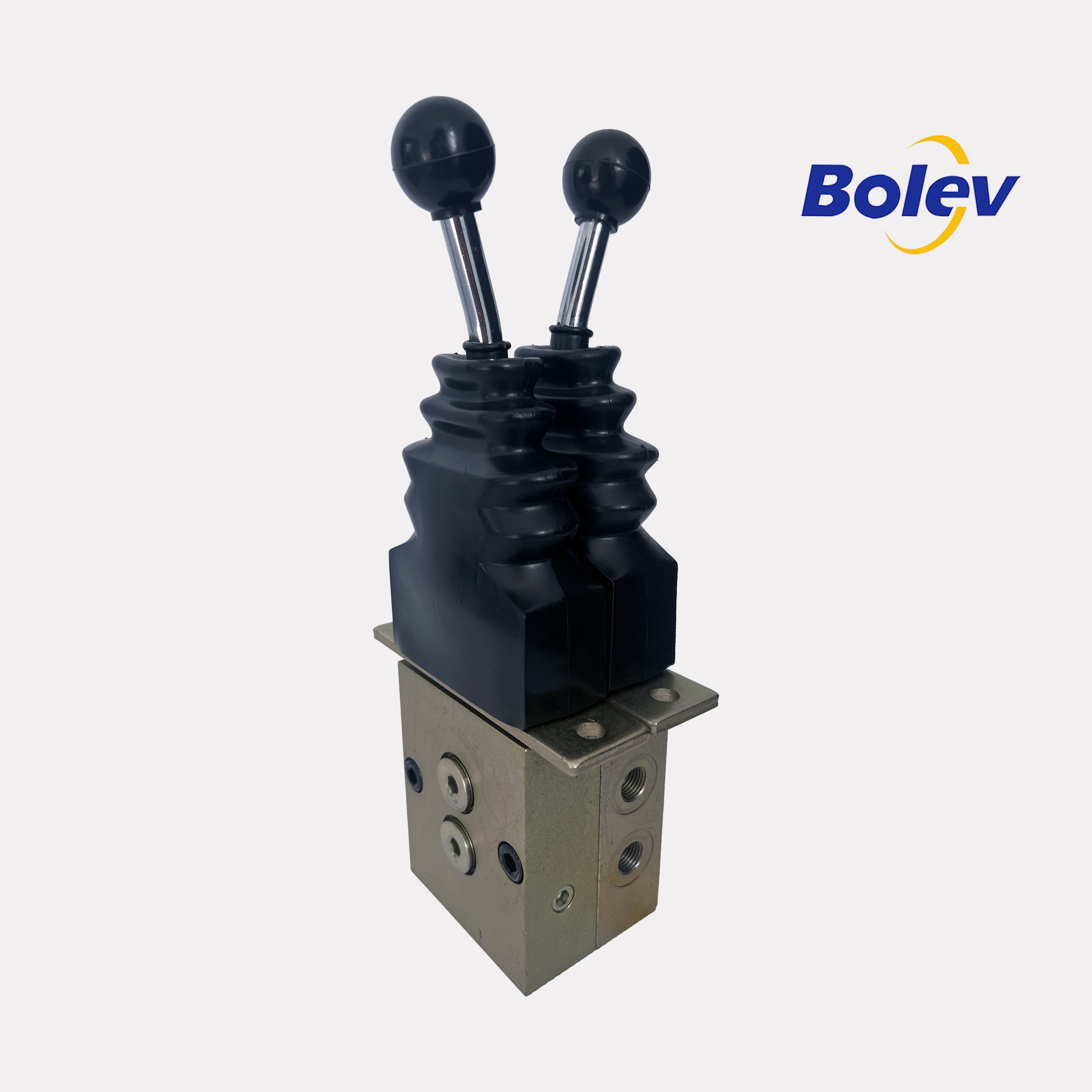
Hydraulic Pilot Valve R220-9 Joystick 220LC-9S Excavator New Condition Lever Pilot Control
Directional Control Valve Series
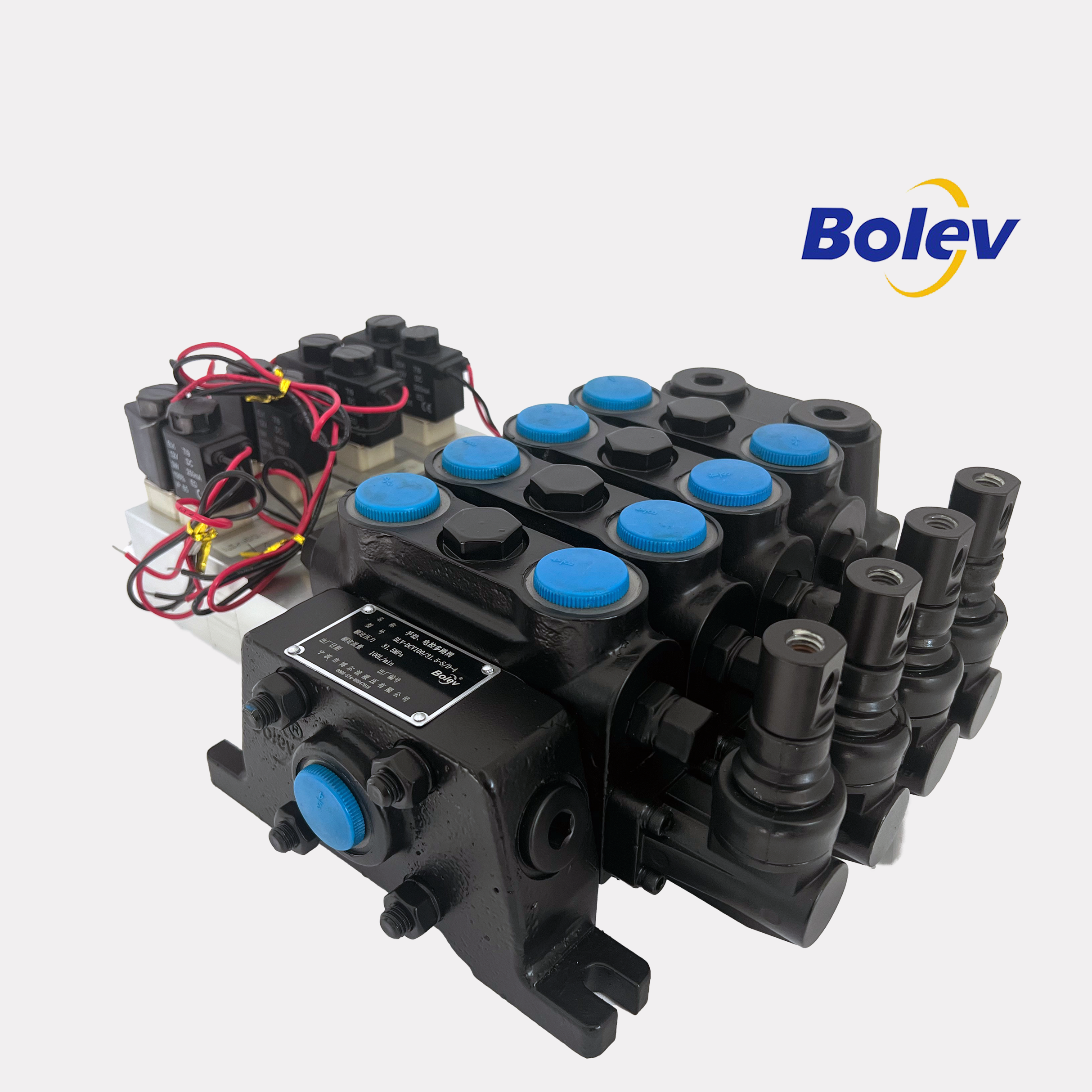
DCV60 Air-Piloted Solenoid Sectional Sanitation Vehicle Excavator Directional Control Valve
Directional Control Valve Series
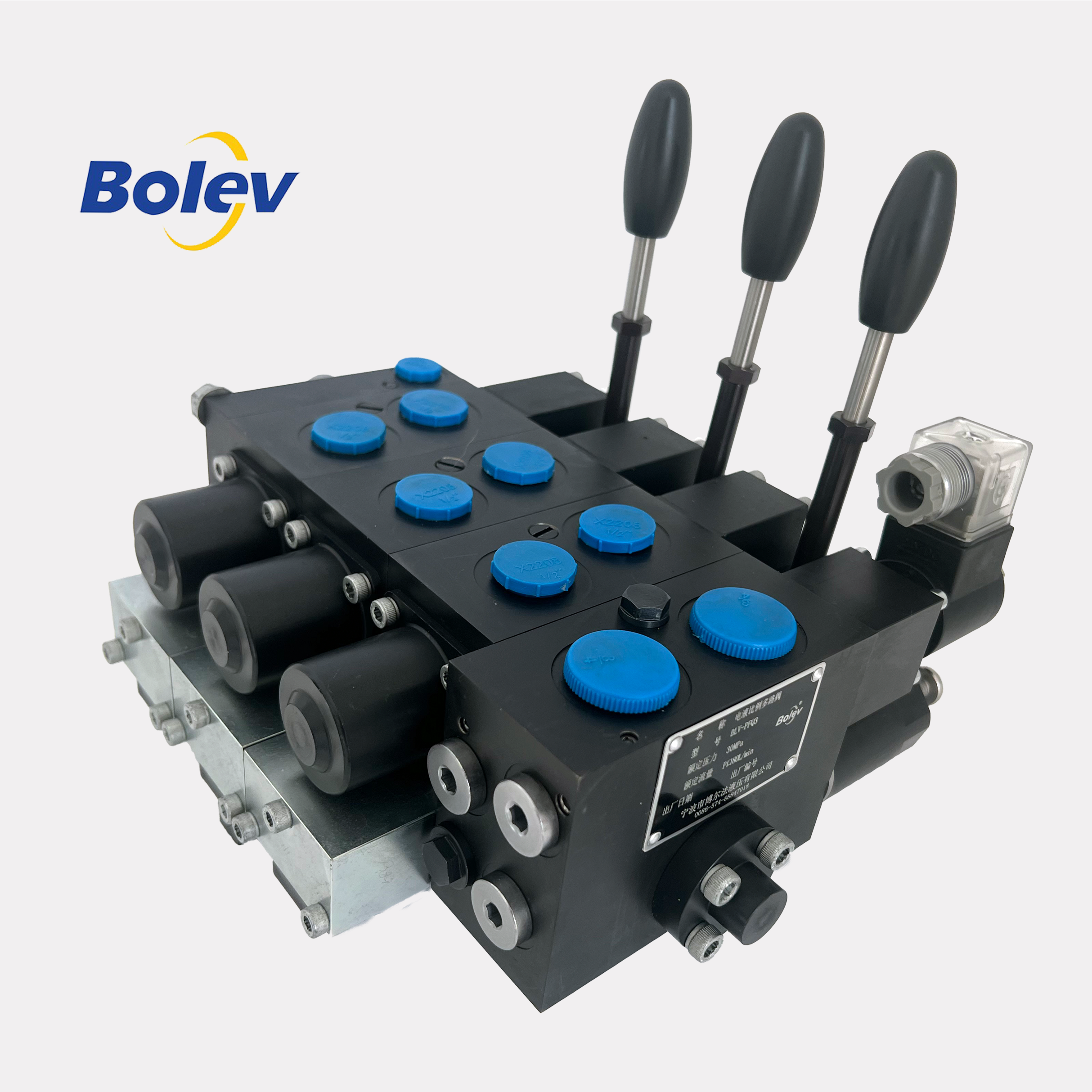
Pressure Compensation Manual Electro-Hydraulic Control psv/psl3 sectional hydraulic valve
Directional Control Valve Series
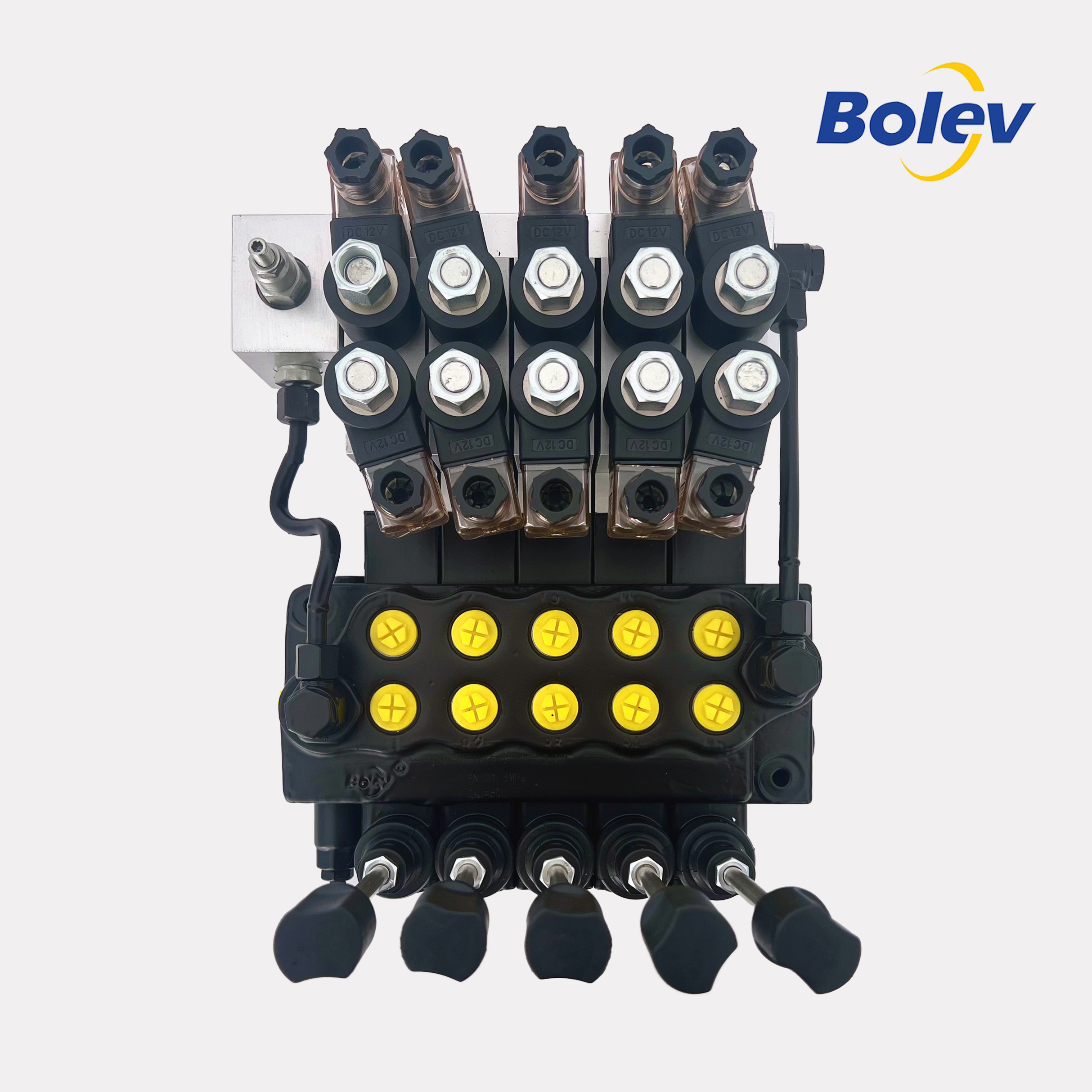
SD series Monoblock Electric-hydraulic Directional Hydraulic Control Valve 60L
Directional Control Valve Series
Contact Us
Address: No.27 Zongyan Road,Xikou Industrial Zone,Fenghua,Ningbo,China
Telephone: 86-574-88845188
E-mail:sales001@nbbolev.com

Tiktok